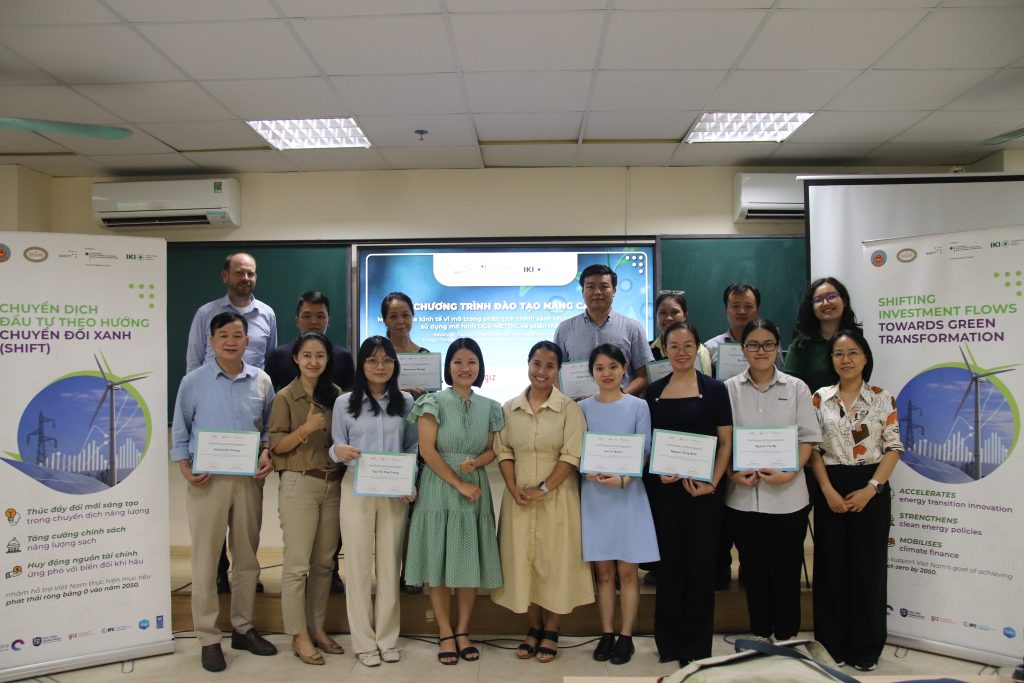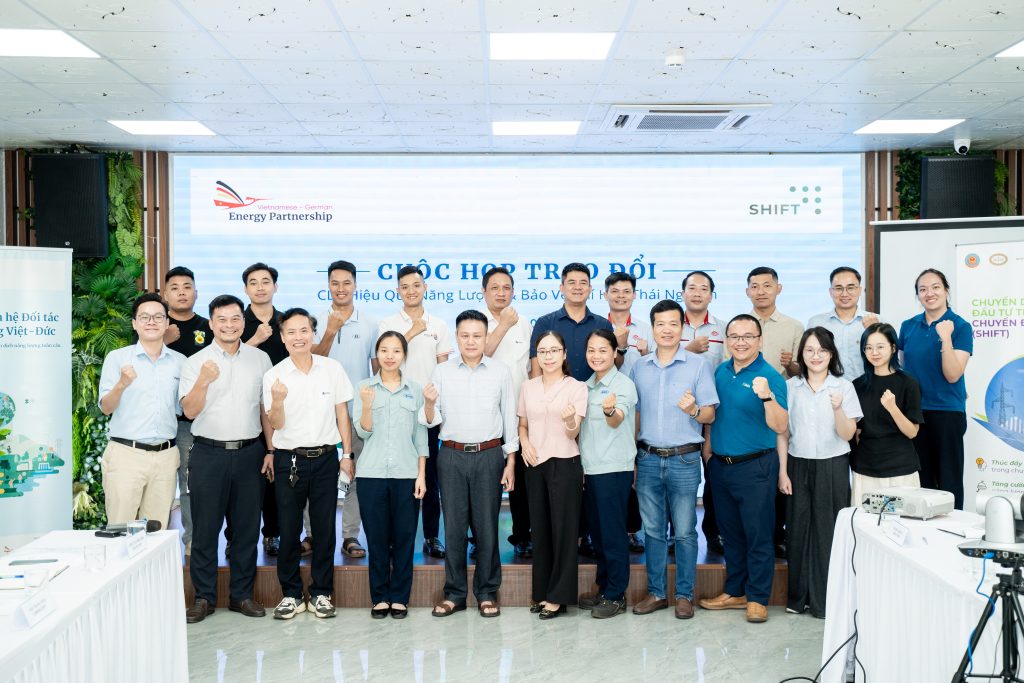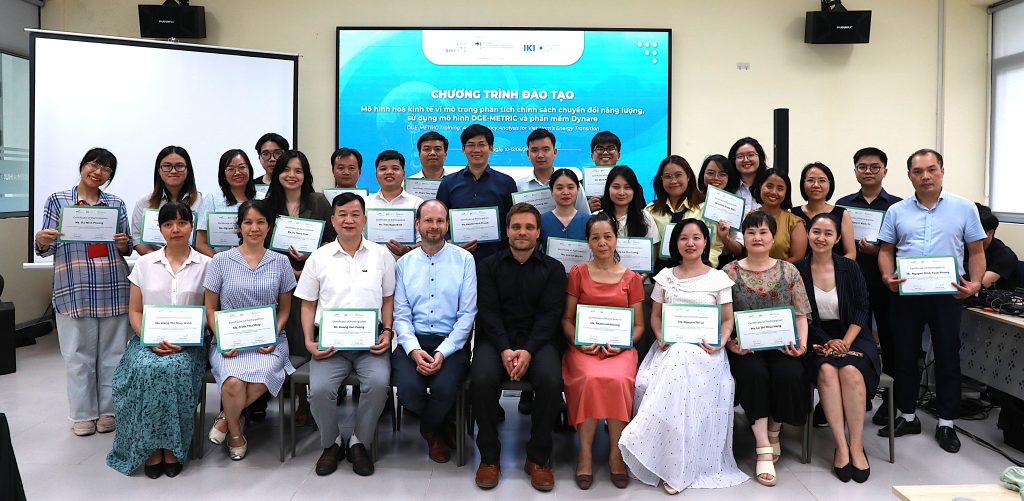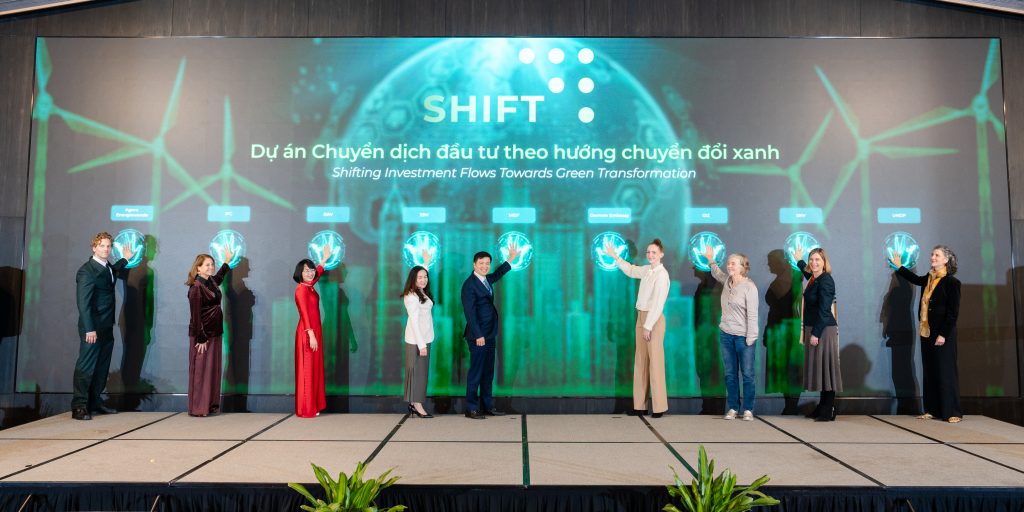
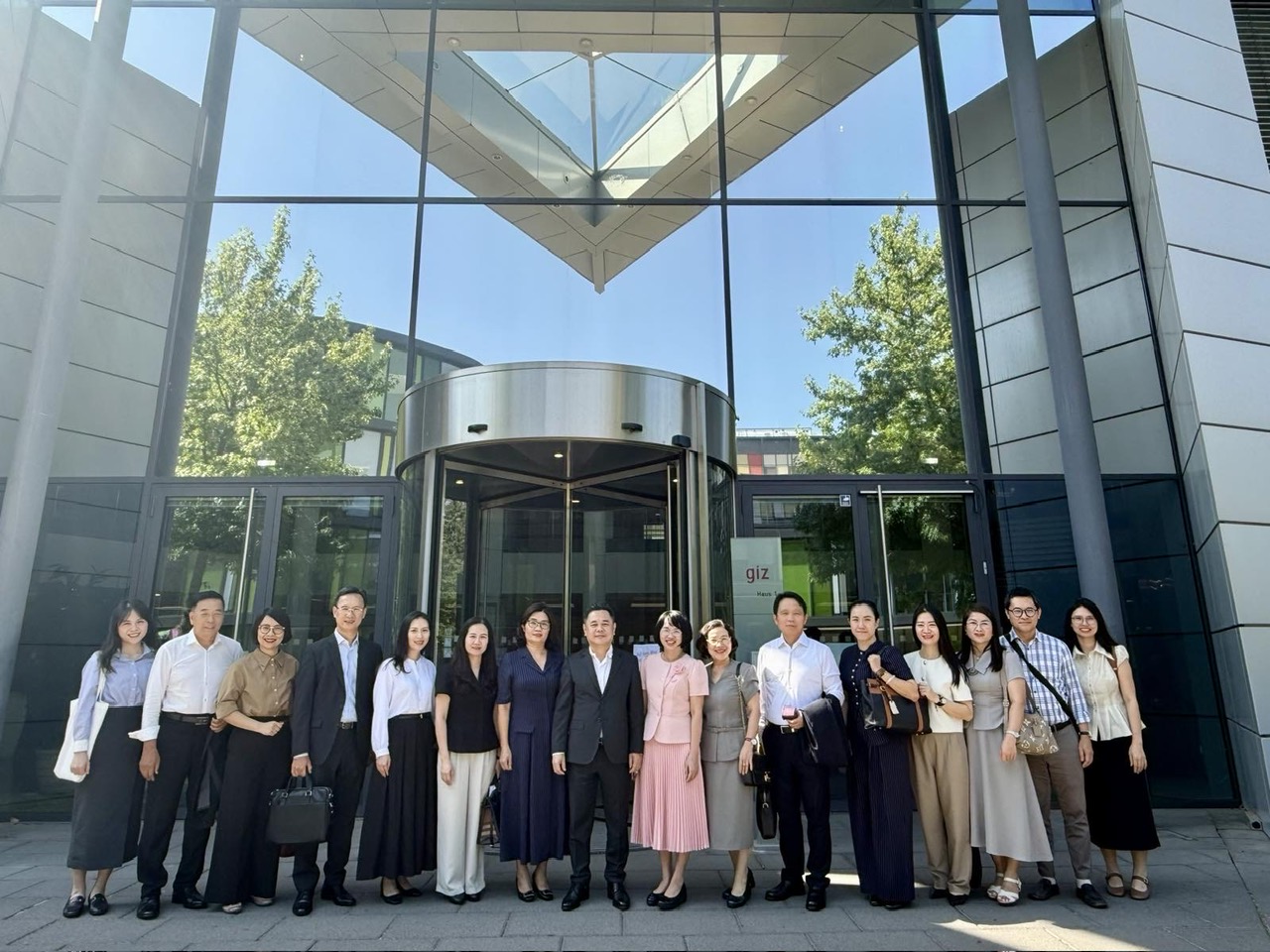
From 24 June to 1 July 2026, representatives from the State Bank of Viet Nam (SBV), the Banking Academy of Viet Nam (BAV) and four Vietnamese commercial banks travelled to Germany to explore how sustainable finance is being implemented in practice. Through exchanges with regulators, financial institutions and academic partners, the delegation gained practical experience that will support Viet Nam’s efforts to strengthen climate risk management and sustainable banking.
The trip was part of Germany’s International Climate Initiative (IKI), organized under the IKI project – Shifting Investment Flows towards Green Transformation in Viet Nam (SHIFT) – led by Deutsche Gesellschaft für Internationale Zusammenarbeit (GIZ). Over the course of a week, Vietnamese decision-makers met leading German and European institutions to learn how sustainable finance is moving from policy commitments to day-to-day implementation.
Putting climate risk into practice
The programme included peer-learning with the European Central Bank (ECB) and Bundesbank. These exchanges showed how climate-related risks are increasingly treated as financial risks and are integrated into banking supervision.
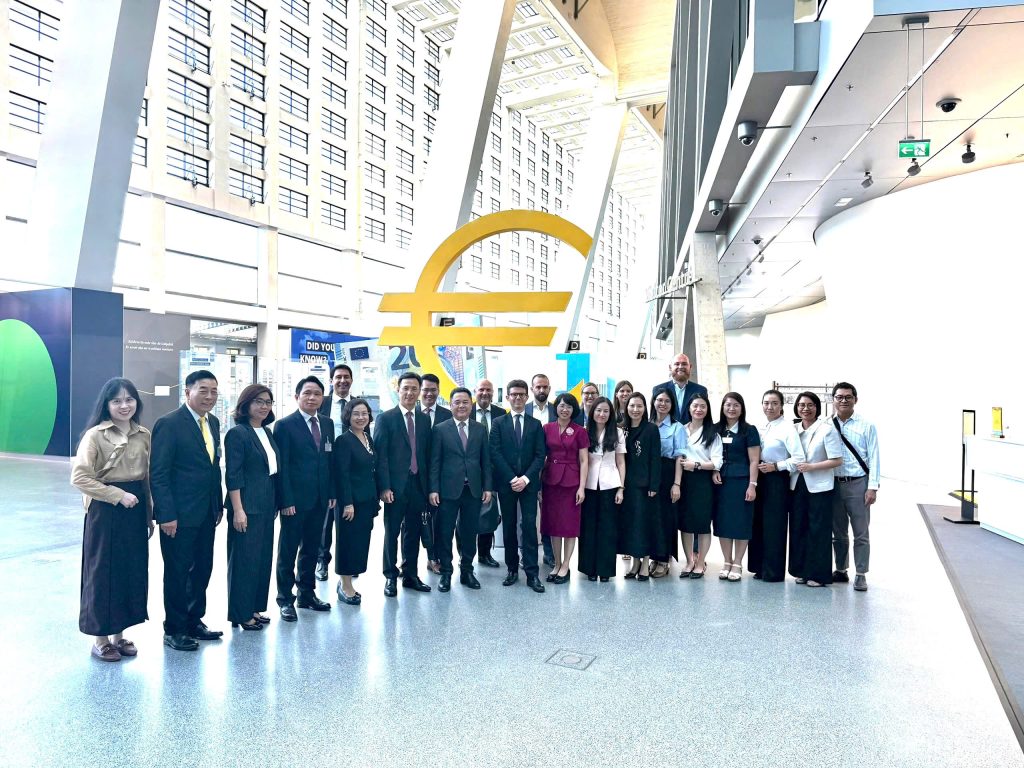
The Vietnamese delegation at the European Central Bank (ECB) during the peer-learning visit on sustainable finance and climate risk supervision. Photo: GIZ.
Rather than developing new policies, many European institutions are now focused on implementing existing frameworks. The delegation explored practical approaches to climate risk management, supervisory processes, sustainability reporting and climate stress testing. These experiences provided valuable references as Viet Nam continues to strengthen its own sustainable finance framework.
Turning data and finance into action
Another key theme throughout the visit was the growing role of data. The delegation learned how climate-related data can support financial supervision, research and policymaking, while also discussing common challenges such as data quality, interoperability and availability.
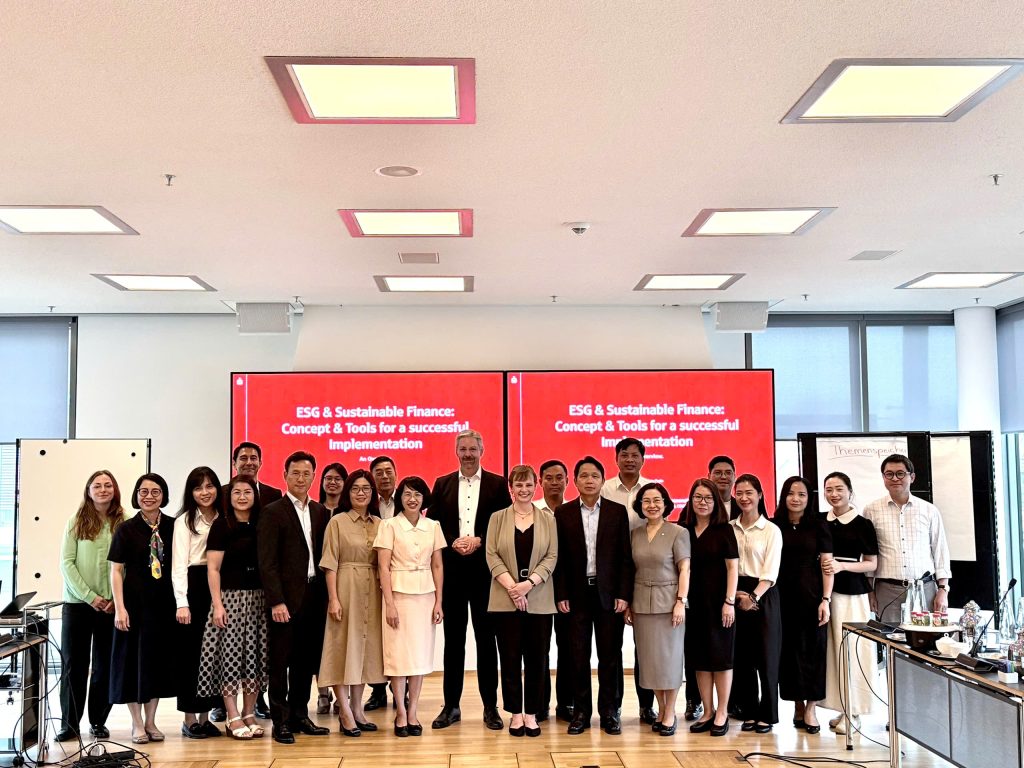
The delegation visited DSIK to exchange experiences on transition finance and ESG integration in the banking sector. Photo: GIZ.
Meetings with Deutsche Bank and other partners demonstrated how financial institutions are supporting businesses through the low-carbon transition. Participants exchanged experiences on transition finance, environmental, social and governance (ESG) integration, and sustainable banking practices that help mobilise investment for greener economic development.
Building knowledge for the future
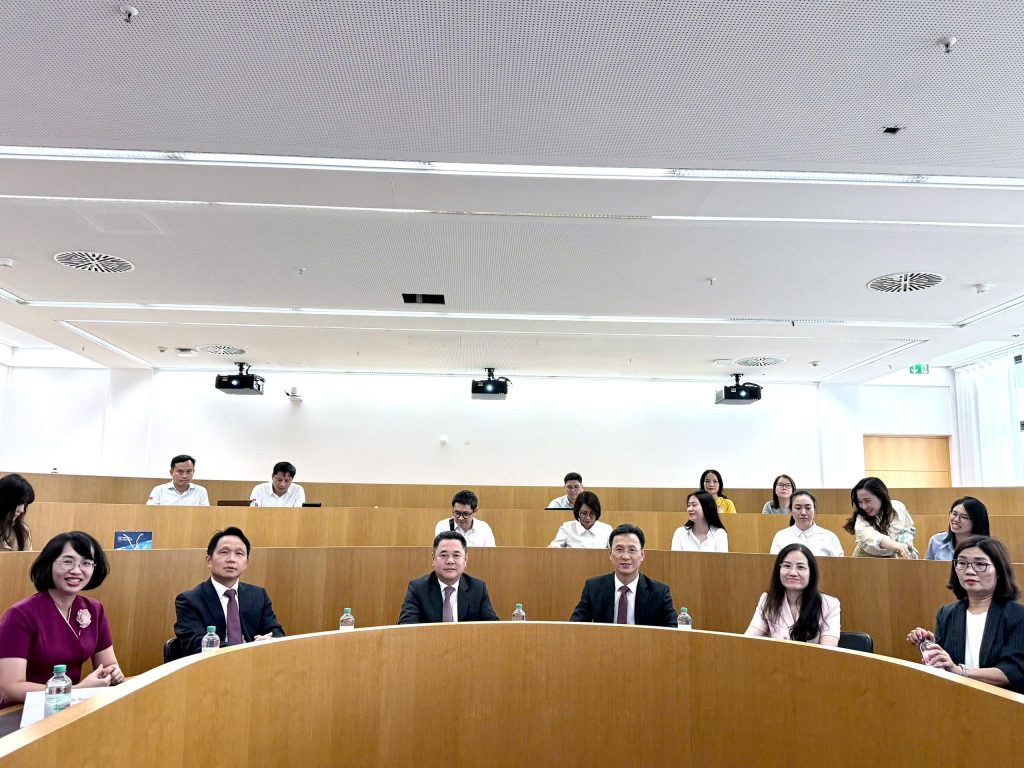
German academic partners shared practice-oriented approaches to sustainable finance education and professional capacity development. Photo: GIZ.
The study visit also highlighted the importance of both practical experience and capacity development. Goethe Business School and the University of Applied Sciences of the Deutsche Bundesbank presented practice-oriented approaches combining academic learning with real-world case studies, practitioner engagement and workplace application. Together, these exchanges offered valuable references for strengthening both sustainable finance practices and professional capacity in Viet Nam’s banking sector under the SHIFT project, helping build long-term capacity for regulators and financial institutions.
Strengthening partnerships
Beyond the technical exchanges, the study visit strengthened cooperation between the State Bank of Viet Nam, Vietnamese commercial banks, the Banking Academy of Viet Nam and their German and European counterparts. Participants agreed to continue technical exchanges on climate risk management, sustainable finance data, sustainability reporting and activities, also related to potential membership in the Network for Greening the Financial System (NGFS).
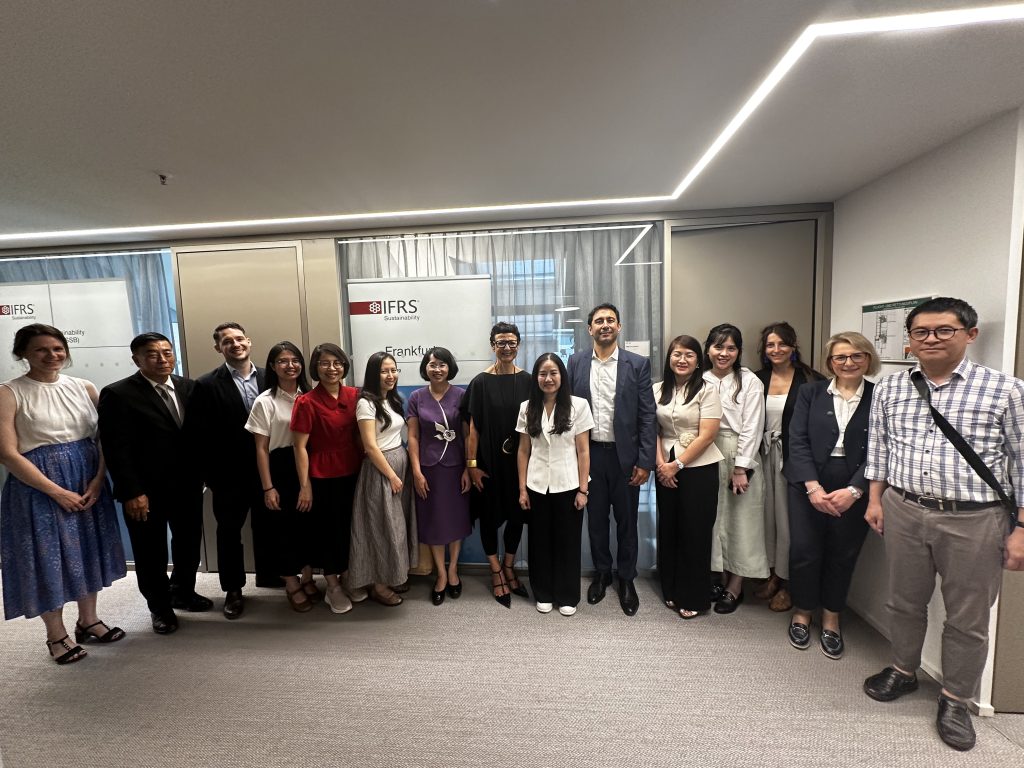
Participants of the study visit with representatives of the International Sustainability Standards Board (ISSB), discussing the implementation of global sustainability disclosure standards. Photo: GIZ.
The visit also opened new opportunities for collaboration between financial institutions and training organisations. Commercial banks identified areas for further cooperation on transition finance, ESG integration and business development, while academic partners expressed their interest in supporting curriculum upgrades, expert exchanges and sharing training materials. These outcomes will contribute to the development of an increasingly standardised sustainable finance training programme under the SHIFT project and support the next phase of Viet Nam’s sustainable finance implementation, aligned with international standards.