By journalist Hải Vân – Economics and Environment Magazine
The three-day field trip to Quang Ngai and Da Nang offered far more than just knowledge about the energy transition. What left the strongest impression on me was the chance to see firsthand how businesses are preparing for a low-emission future. The trip also reinforced an important realization: the energy transition is not driven by any single factory, technology, or project. Rather, it is the result of an entire industrial ecosystem evolving together.
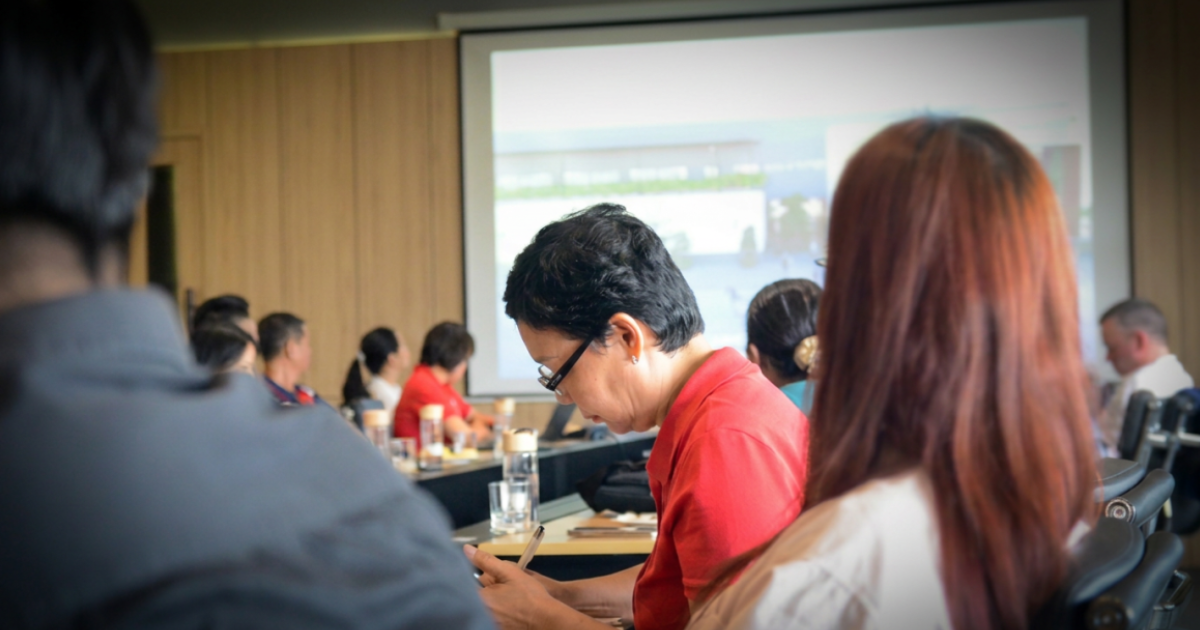
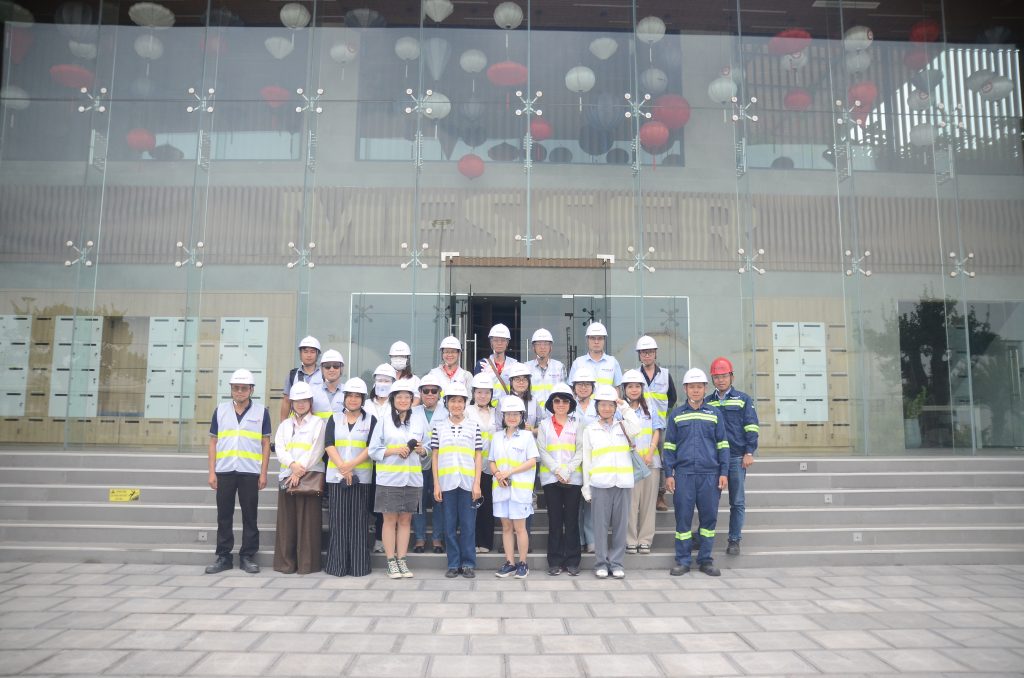
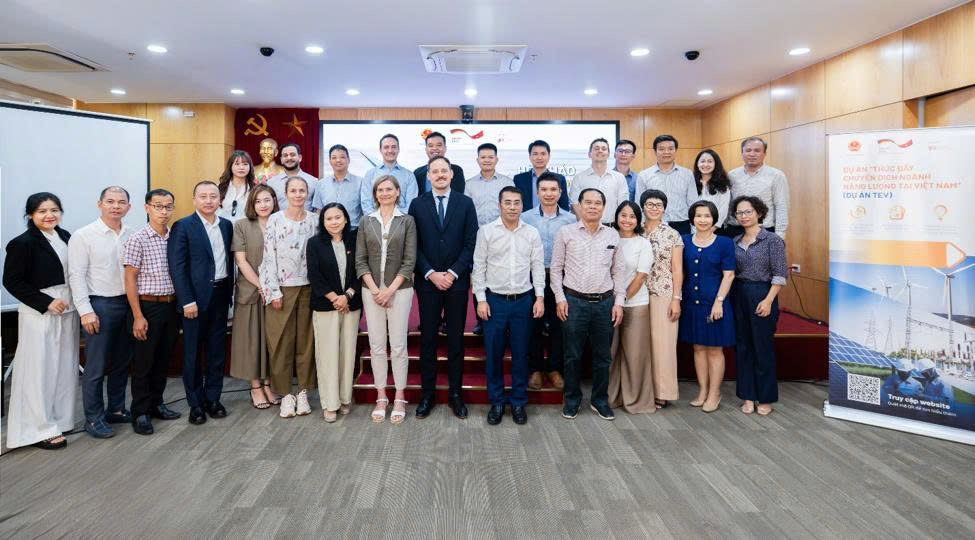
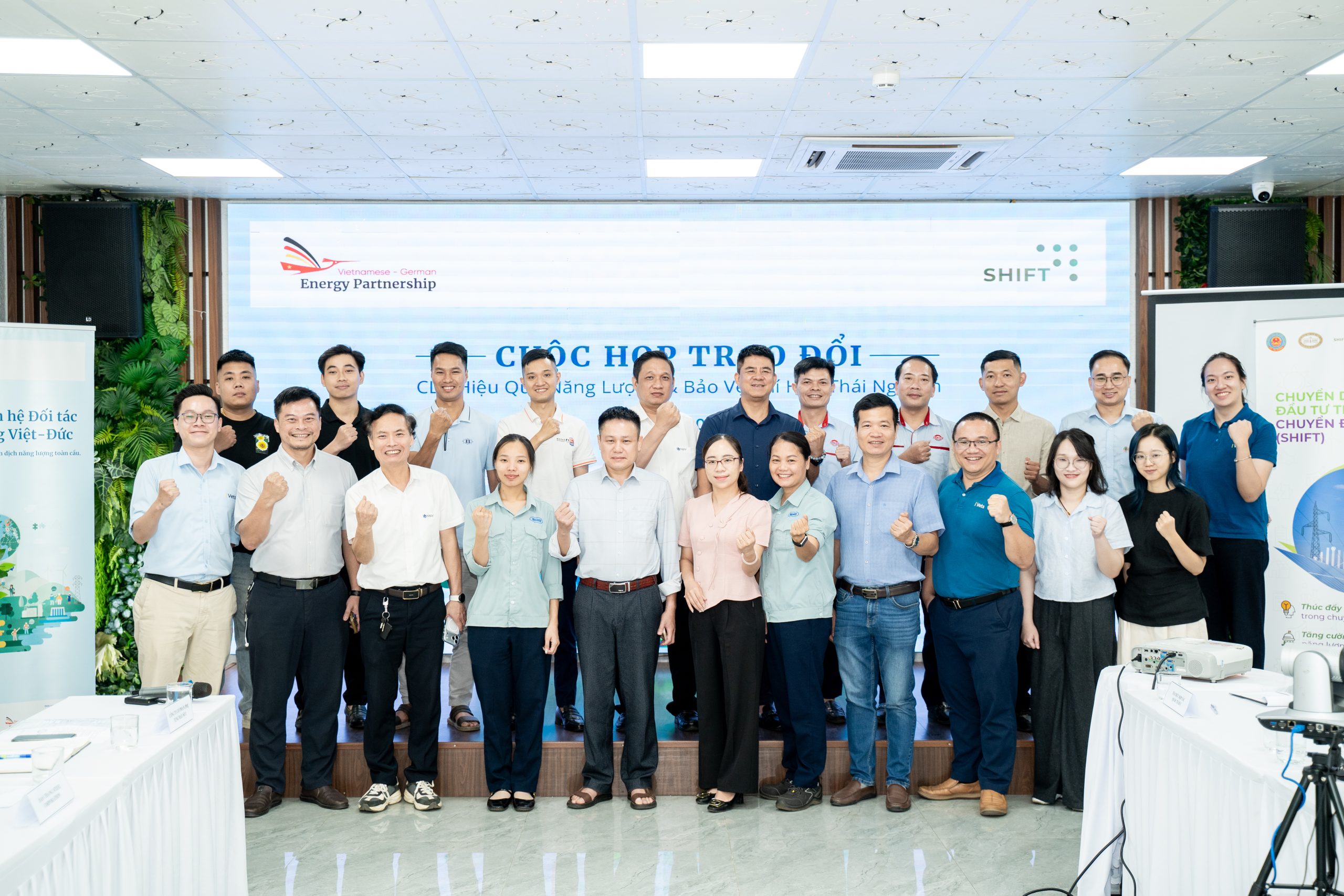
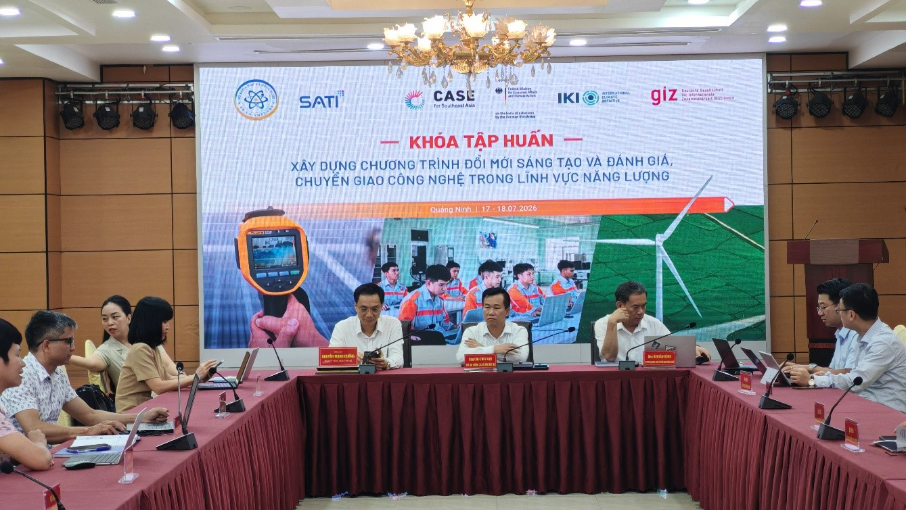
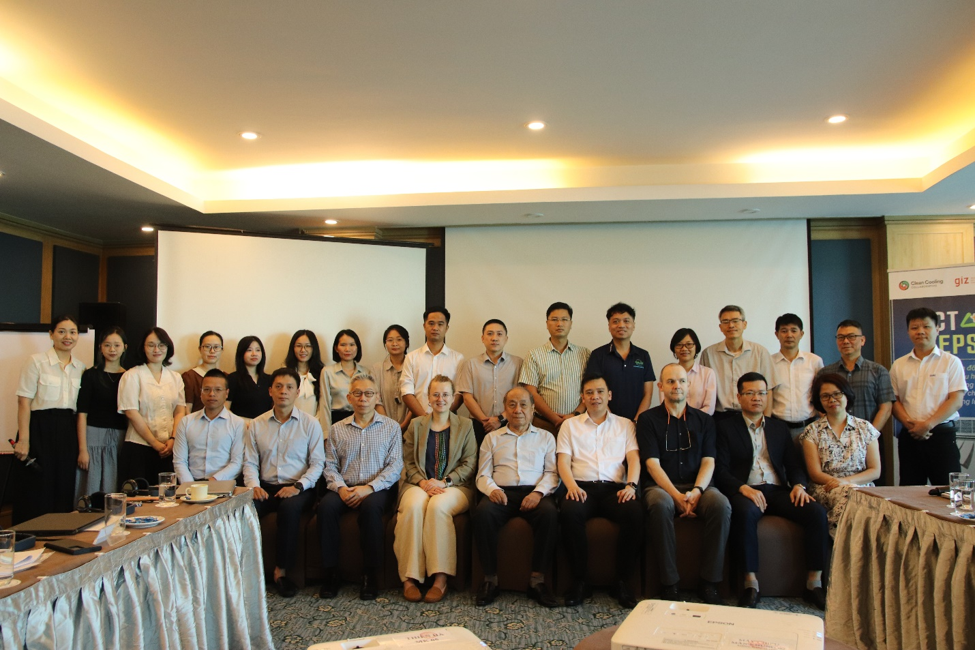
A discussion meeting between GIZ, businesses, and press agencies. Photo: MOST Media Centre.
This, to me, is the true value of a field trip in journalism. Documents can be sent in advance, presentations can be shared afterward, but the feeling of being on-site, the questions that arise while walking through a plant, and the direct conversations with experts simply cannot be replaced. That is the difference between knowing the information and truly understanding the story.
– Journalist Hai Van –
From this perspective, GIZ’s Press Trip 2026 was thoughtfully organized. Logistics were carefully prepared, the schedule was well structured with reasonable working pace, leaving enough time for journalists to observe, take notes, and engage on site. The way GIZ connected journalists with businesses was particularly effective, allowing for direct conversations with business leaders and technical experts beyond the usual presentations. This openness not only enriched the discussions but also made it easier for journalists to explore and develop their stories.
The three destinations of the trip also reflected an interesting approach. At first glance, they appeared to tell three separate stories: floating solar power, the transformation of a petrochemical refinery, and industrial gas production. But taken together, they revealed different yet interconnected pieces of the energy transition puzzle.
The visit to a floating solar site raised important questions about emerging energy solutions and the conditions needed to ensure long-term sustainability. The working session at the Petrovietnam Refining and Petrochemical Corporation (BSR) offered insights into how a refinery is preparing for transition through research on hydrogen, Power-to-Liquid (PtL) technologies, and emission reduction initiatives. Meanwhile, the visit to Messer Quang Ngai, an industrial gas production project in the Dung Quat Economic Zone, highlighted the importance of industrial gas infrastructure in enabling low-emission manufacturing. Three destinations pointed to a broader insight: the energy transition is not solely a transformation of the power sector, but a fundamental shift taking place across the entire industrial value chain.
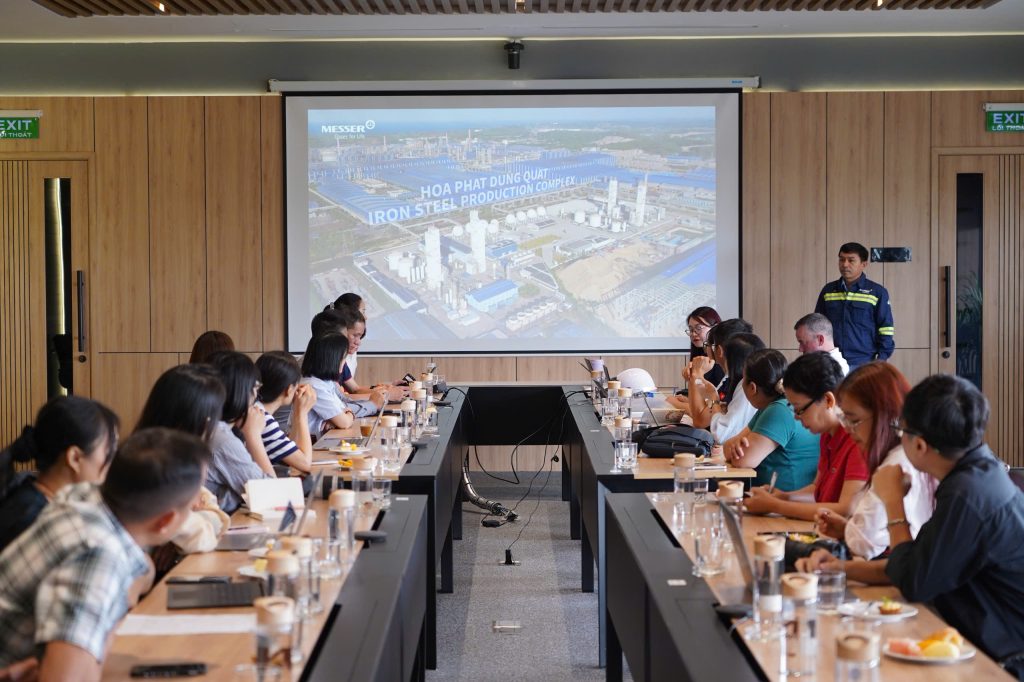
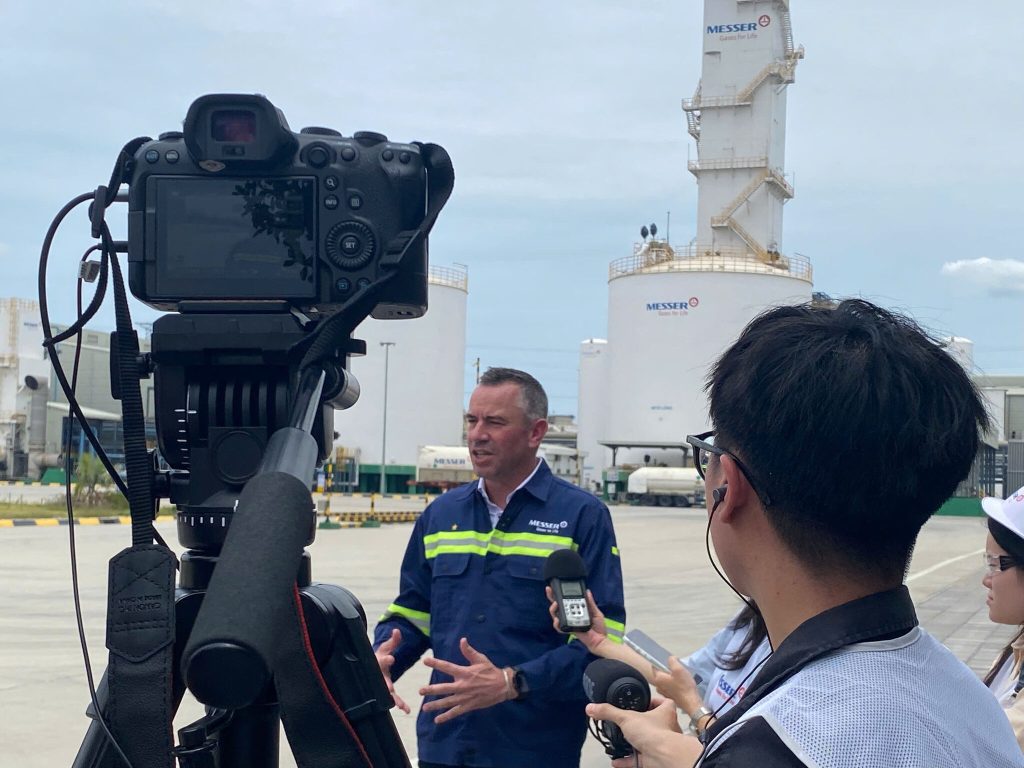
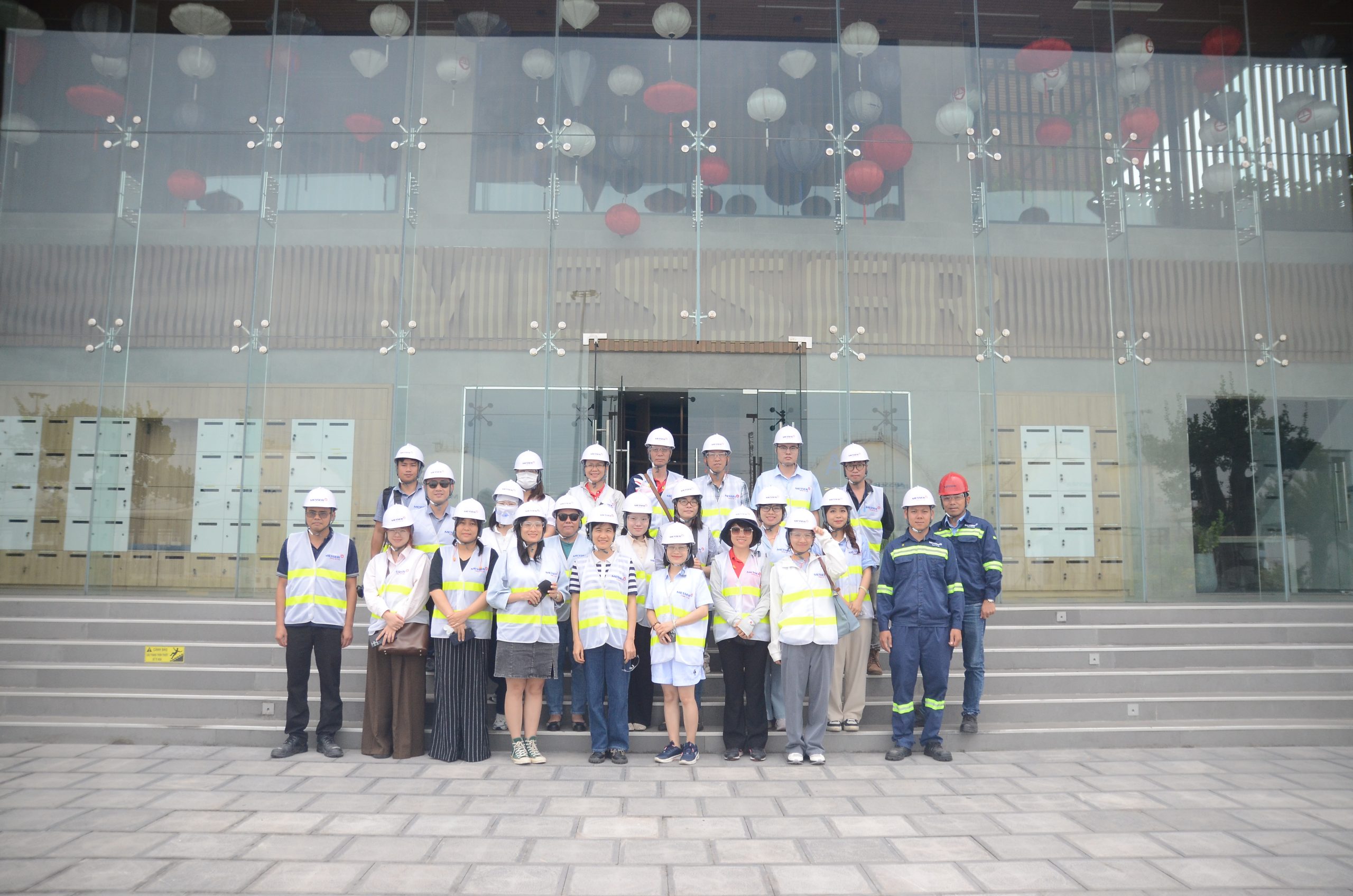
Interview with representives at Messer Quang Ngai. Photo: GIZ.
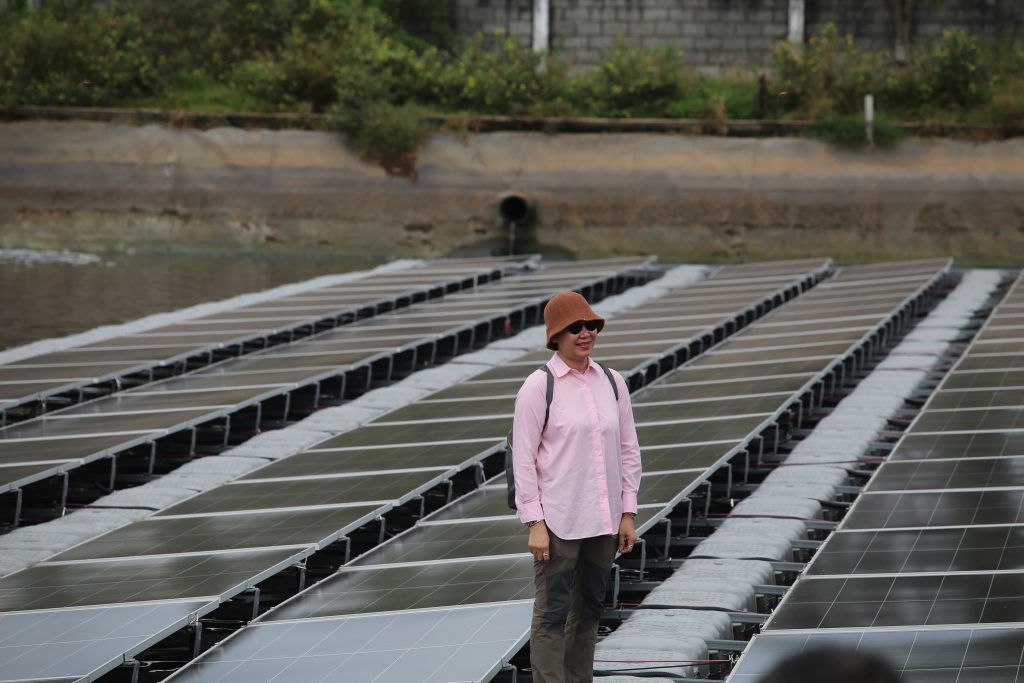
Damintech’s floating solar project. Photo: Journalist Ngo Ha.
However, this experience left me with a lesson worth reflecting on.
The value of the trip very much depends on the knowledge base of each participant. For reporters who have long covered the energy sector, connecting information across destinations and identifying story angles came relatively easily. For younger or less specialized reporters, however, absorbing a large volume of technical information in a short time was not an easy task. Emerging concepts such as floating solar, green hydrogen, industrial gas, and Power-to-Liquid cannot be fully understood without proper context. Building that foundation enables journalists to ask more relevant questions, engage in deeper discussions, and develop more accurate stories when working with businesses.
Another observation is that some of the most valuable journalistic insights emerged after the formal presentations ended. At the floating solar site, many issues around planning, transmission infrastructure, or environmental trade-offs only became clear through direct conversation with businesses. At BSR, compelling angles for the press also mainly came from interviews touching on electrolysis costs, the Power-to-Liquid roadmap, or how the company is preparing for a low-emission energy market. This shows that space for direct dialogue remains a vital part of the learning process, making room for in-depth journalism.
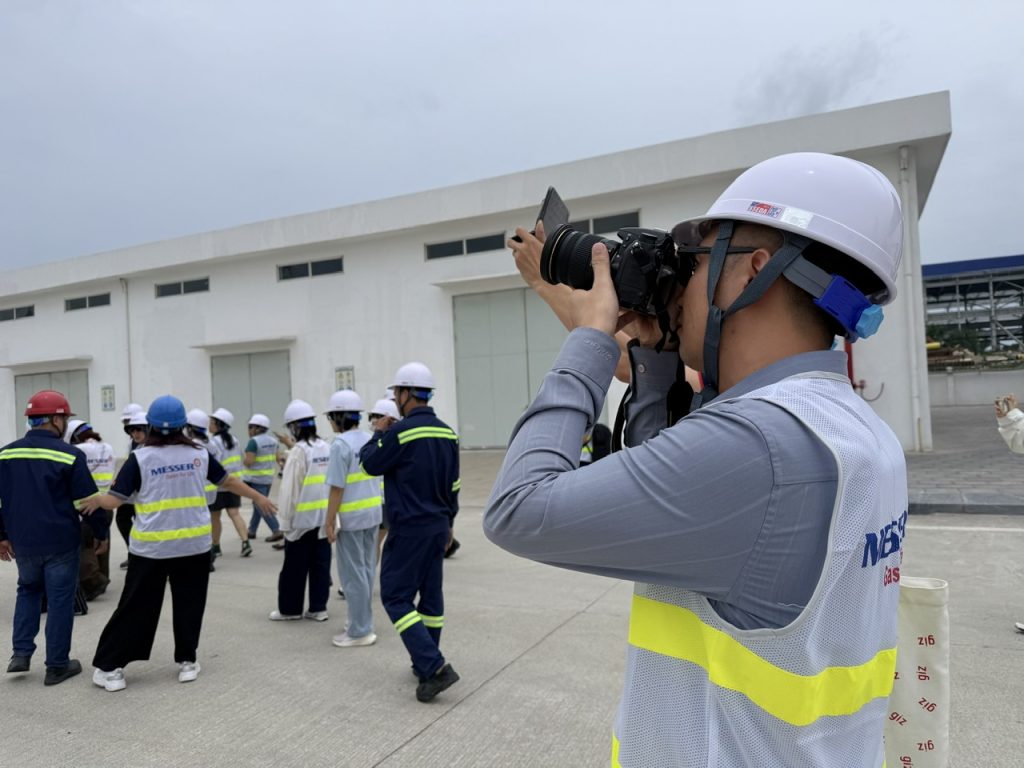
Journalists covering the field visit. Photo: Journalist Kieu Thoan Thu.
Perhaps, the next step is not about adding more destinations or presentations but about helping participants build stronger connections with what they have observed. For highly technical topics, a short orientation session or background briefing document before the trip could provide valuable context on policy frameworks, industry value chains, and key issues to explore. This would enable journalists, particularly young or non-specialized reporters, to approach field visits with greater confidence and ask more informed questions. Similarly, a brief end-of-day reflection session would help participants consolidate their learning, exchange perspectives, and connect insights from different destinations. Such a step could make the overall learning experience more comprehensive and meaningful.
If published articles are seen as the final outcome of a press trip, the true value of such a journey is not measured by the number of destinations visited or meetings held. Rather, it is assessed by how many stories participants are able to uncover, how many connections they are able to recognize, and how much evidence they gather to better examine the complexities of the energy transition process. From this perspective, the Press Trip 2026 of GIZ successfully created a conducive environment for meaningful learning and reporting. Continuing to invest in participants’ “awareness journey” alongside the “site visit” would further enhance future press trips, enabling journalists to produce balanced, evidence-based stories that contribute greater value to Viet Nam’s energy transition.