Before setting off, Ms. Hai Van – a journalist who has covered the energy sector for many years – never felt short on information.
Reports and studies on green hydrogen, Power-to-Liquid (PtL), or floating solar power were all familiar territory. Yet after three days in the field with GIZ’s Press Trip 2026 in Quang Ngai and Da Nang, what stayed with her most wasn’t a number or a presentation.
It was the moment she realized just how wide the gap is between following the energy transition and actually witnessing it unfold.
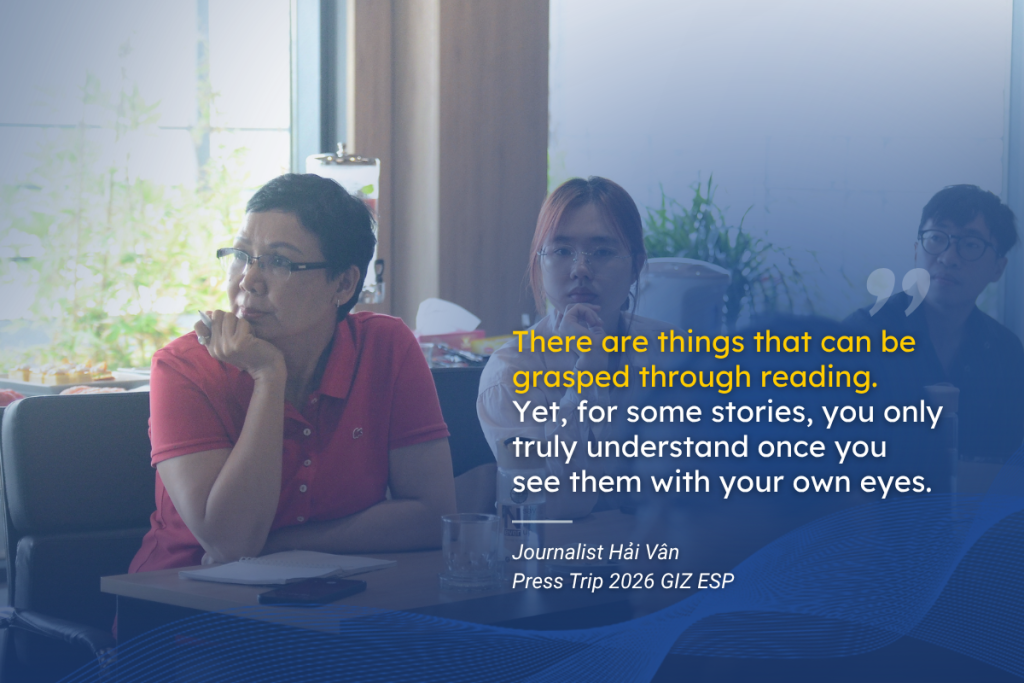
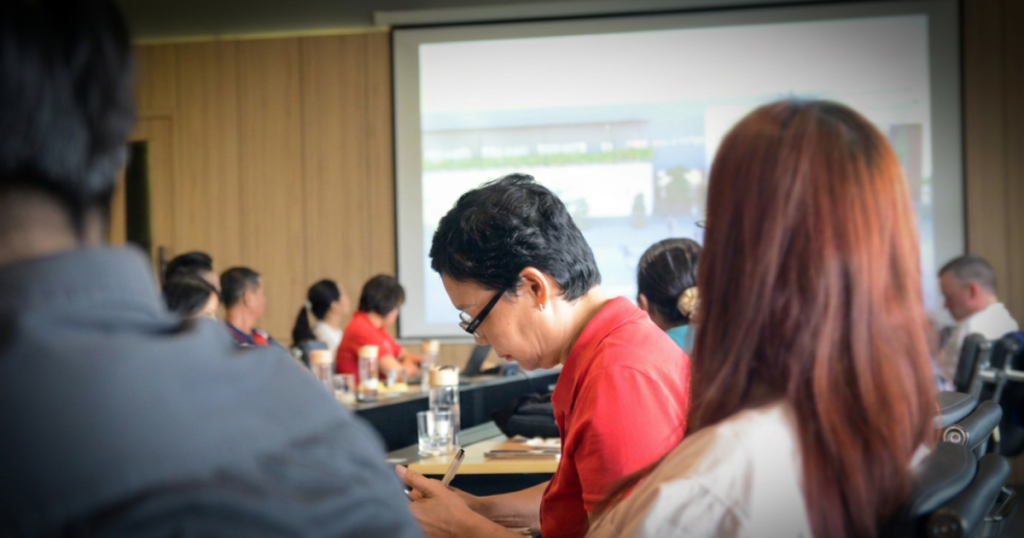
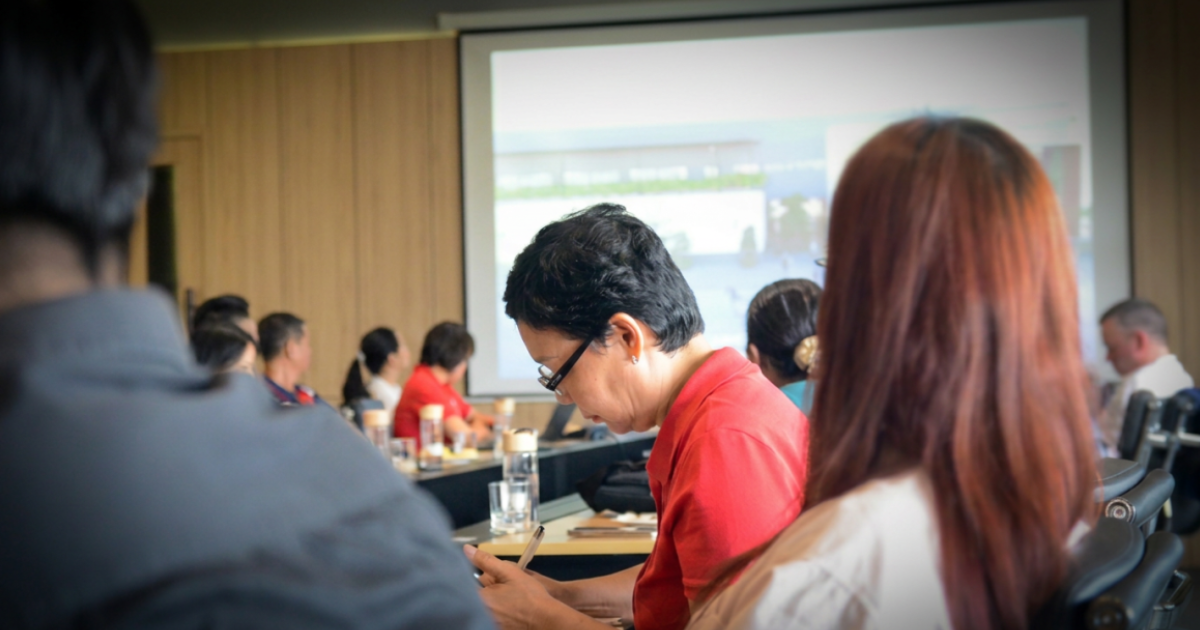
Journalist Hải Vân (in red) during a discussion with representatives of the Messer Dung Quất Air Separation Plant. Photo: GIZ.
Only by standing inside a factory, speaking with engineers operating new technologies, listening to business leaders explain investment decisions for a low-emission future, and observing each link in the value chain do familiar concepts become real, tangible stories.
“Documents can be sent in advance, presentations can be shared afterward, but the feeling of being on-site, the questions that arise while walking through a plant, and the direct conversations with experts simply cannot be replaced,” said journalist Hai Van after the trip. “That is the difference between knowing the information and truly understanding the story”.
What Ms. Hai Van realized after the trip is the value a field program hopes to bring to journalism: not just more information, but the chance for journalists to verify, connect, and gain a deeper understanding of the shifts taking place in Viet Nam’s energy transition.
Seeing energy transition in reality
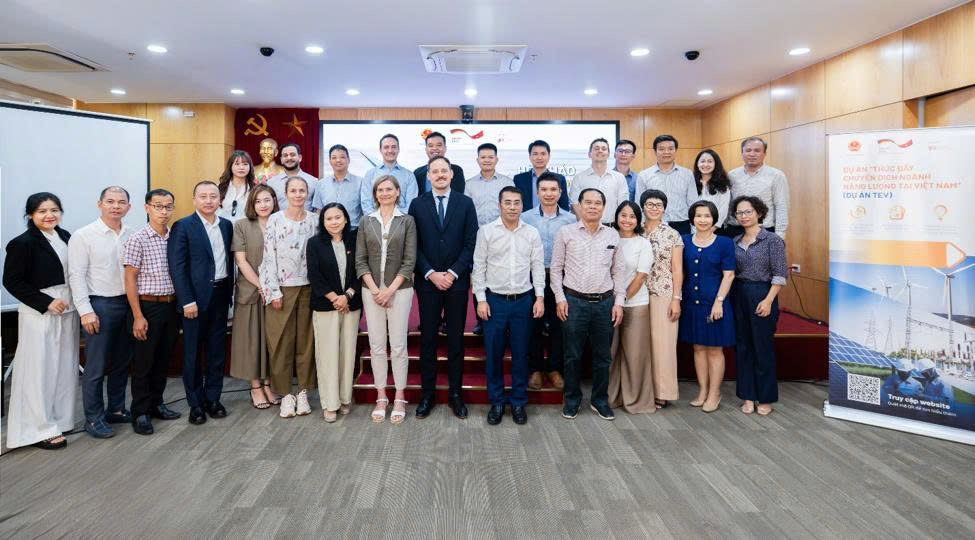
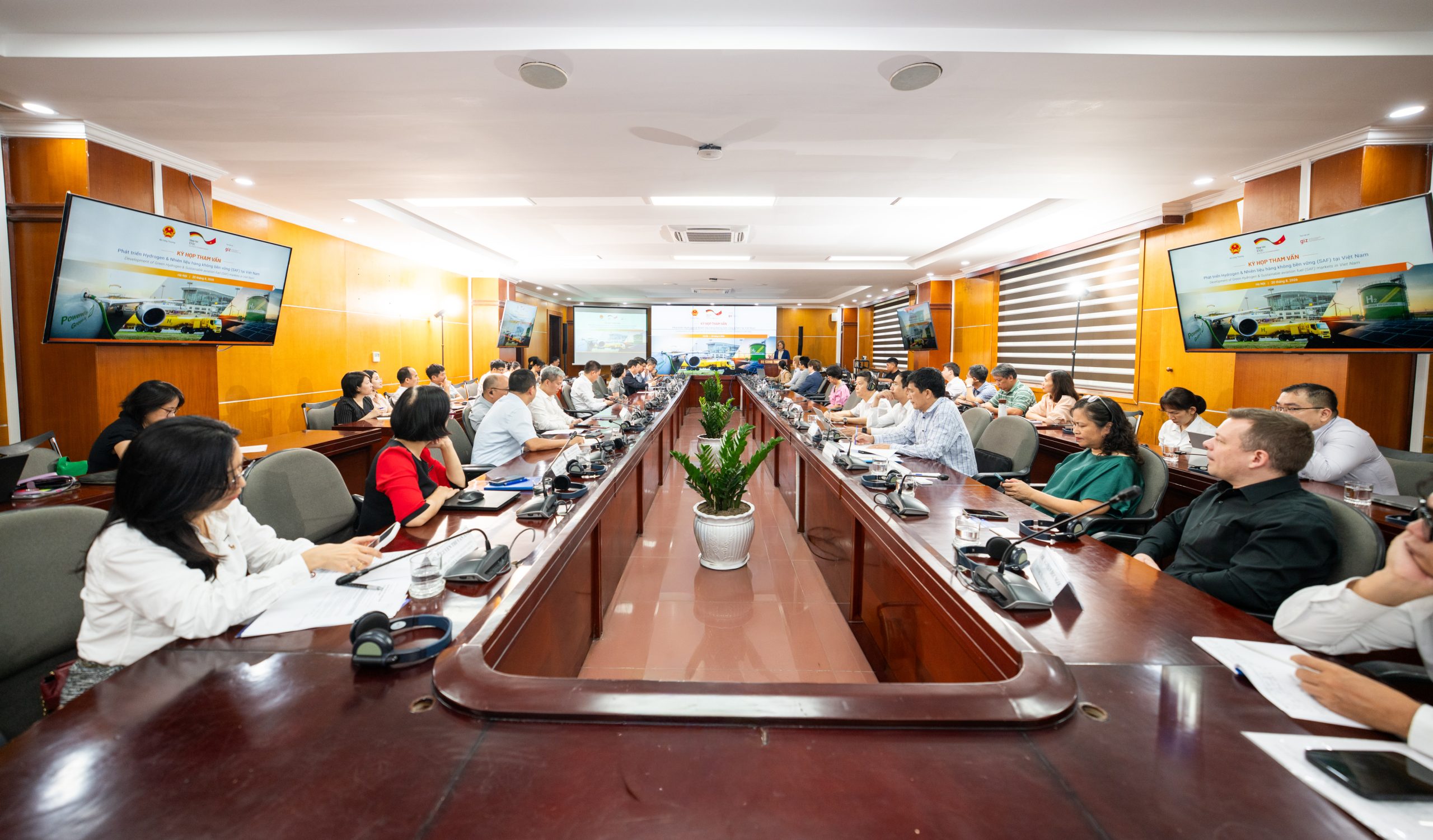
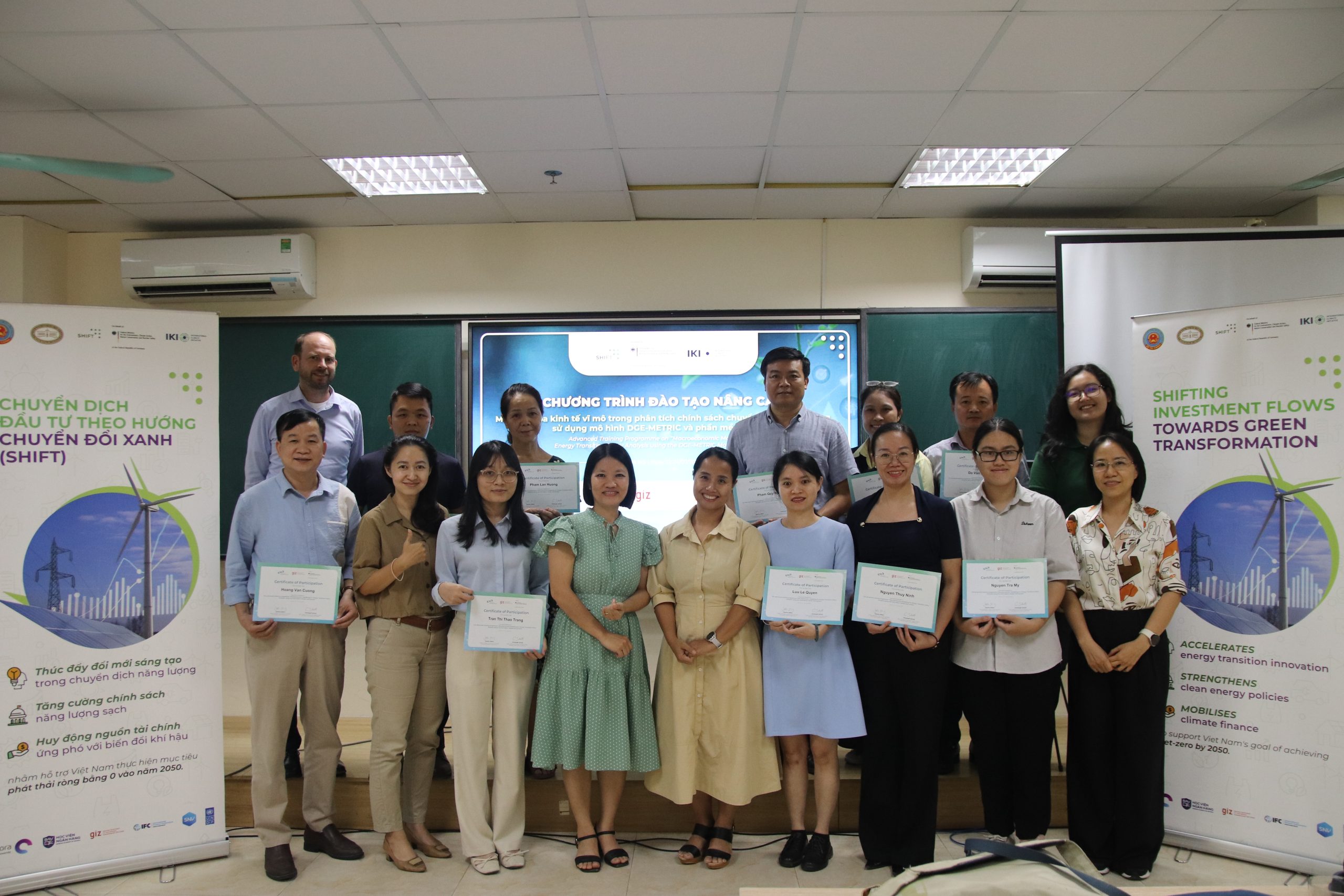
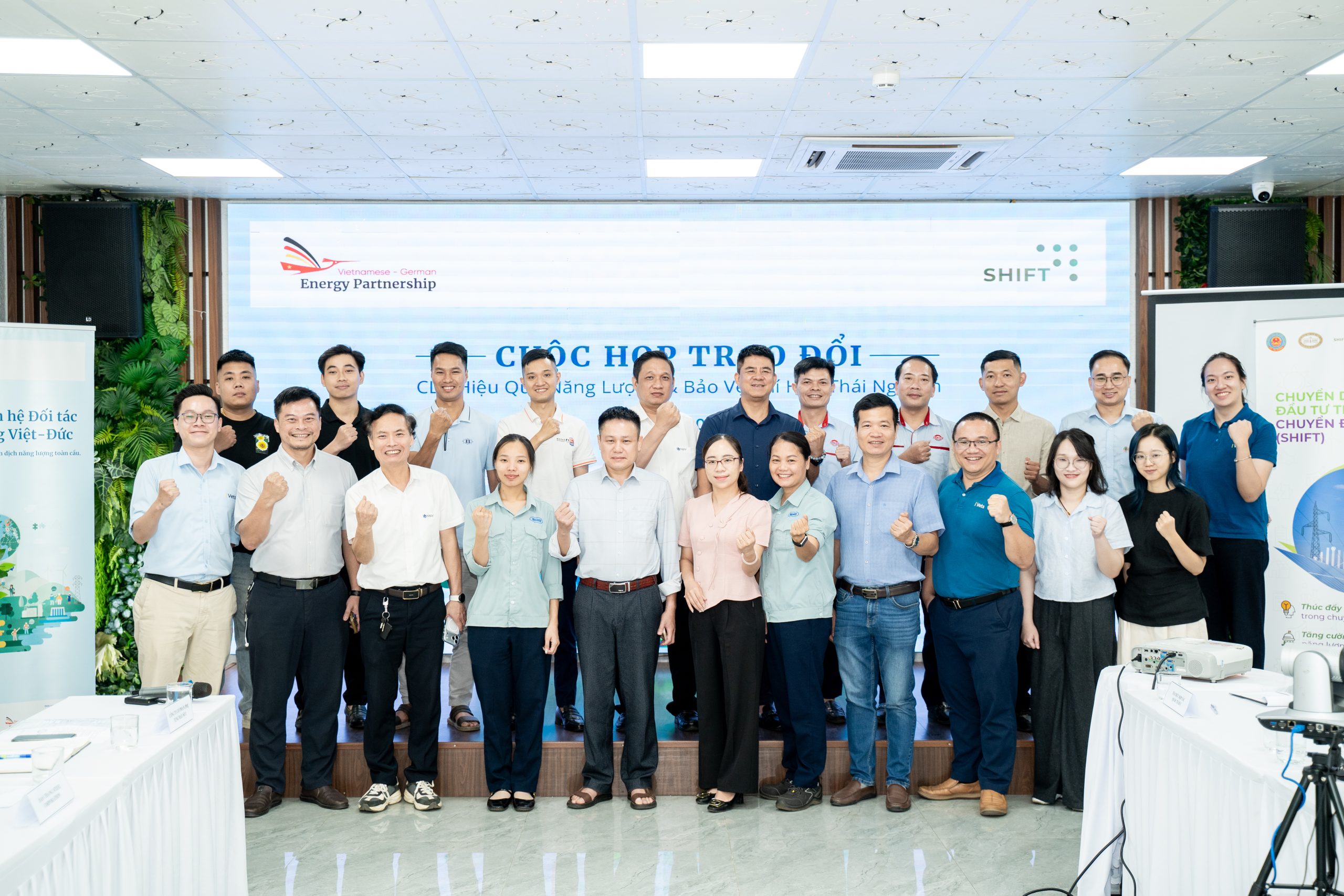
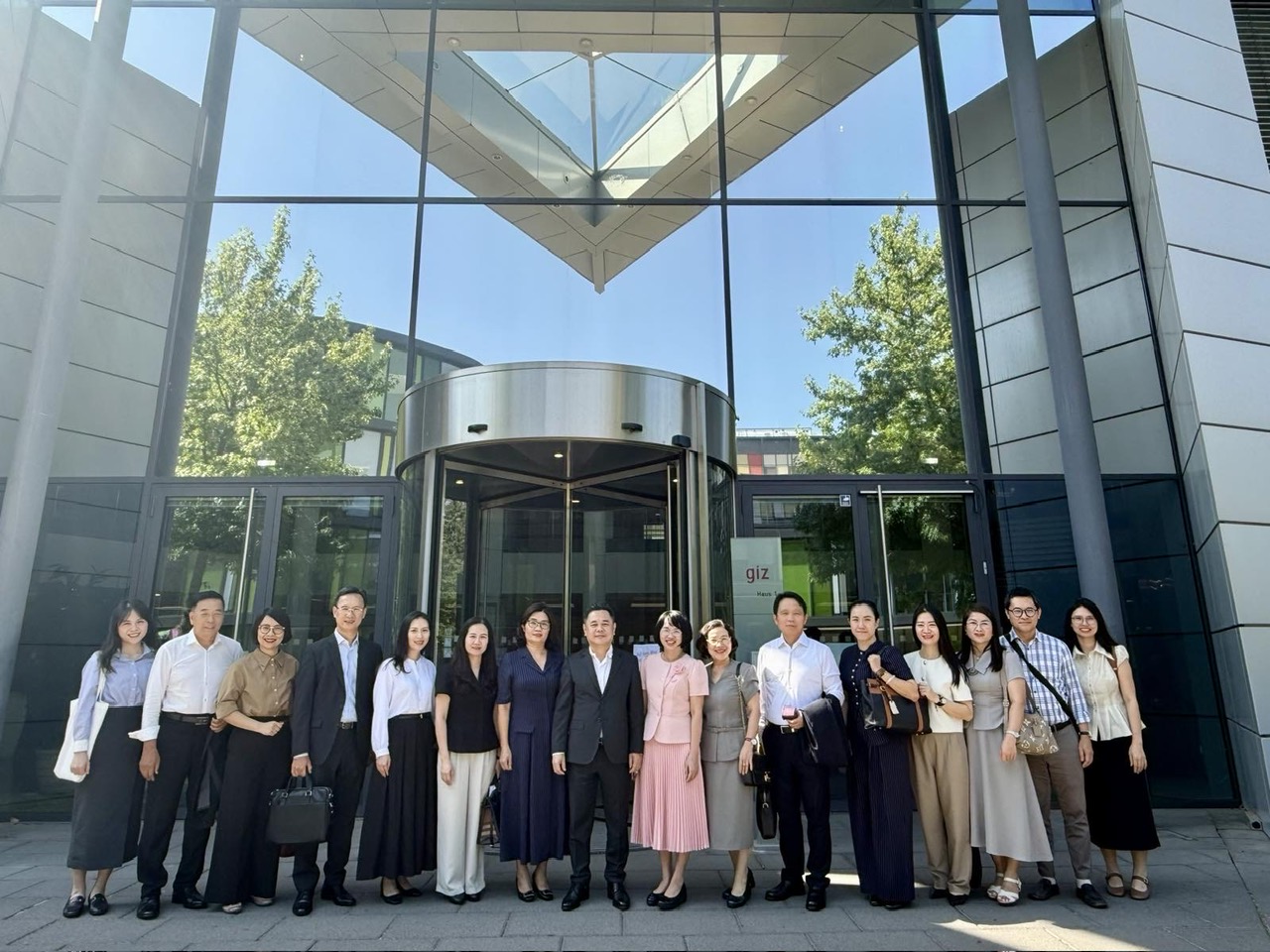
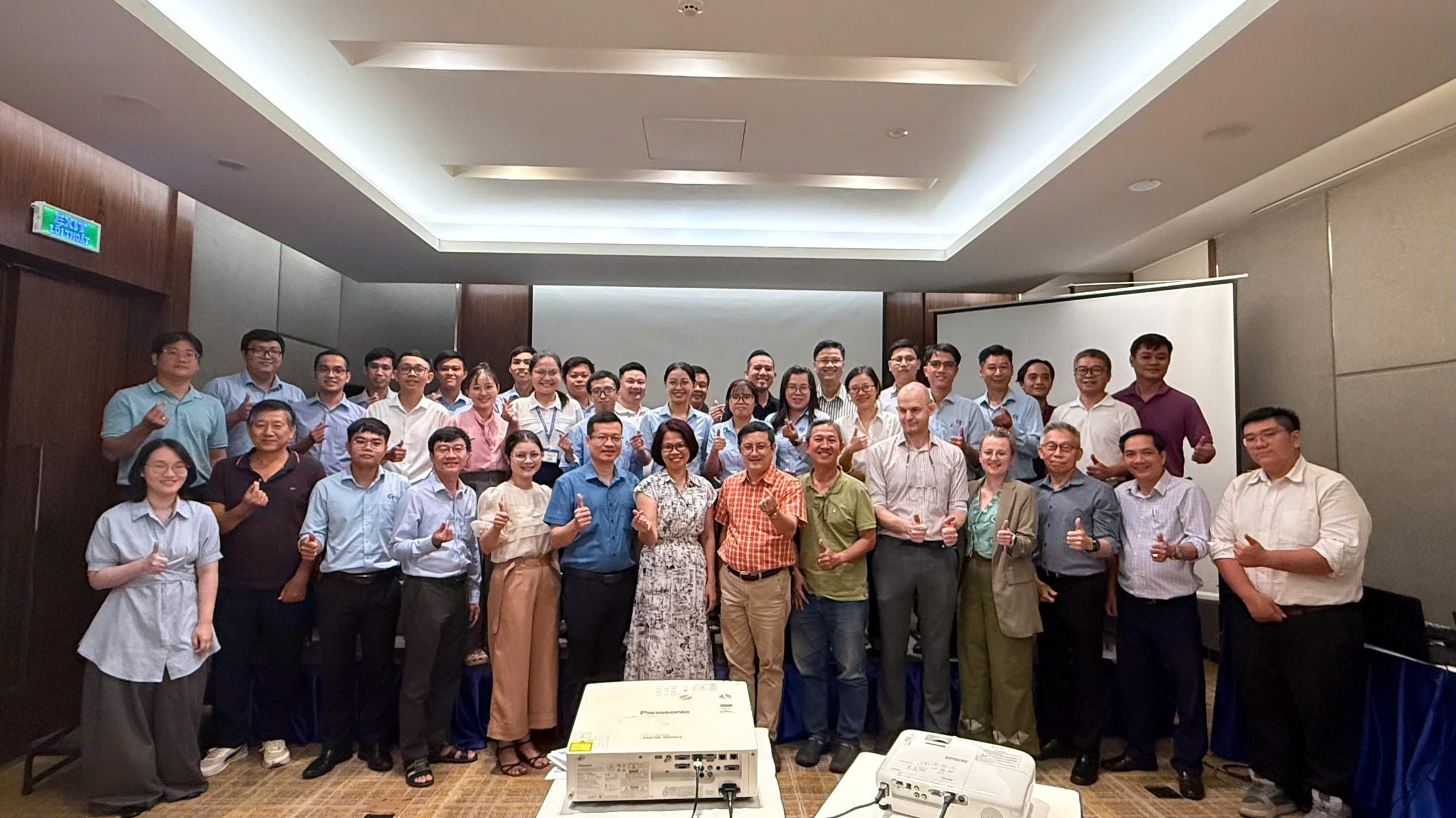
From July 7-9, 2026, 16 journalists and reporters from media outlets across the country took part in Press Trip 2026 in Quang Ngai and Da Nang to explore how major Vietnamese enterprises are preparing for the journey toward decarbonization and energy transition.
Rather than accessing information solely through presentations or reports, the journalists visited sites directly, met with business leaders, engineers, and technical experts to observe how energy transition strategies are being put into practice in production and operations.
Over three days, the group visited three enterprises representing different parts of the energy transition value chain.
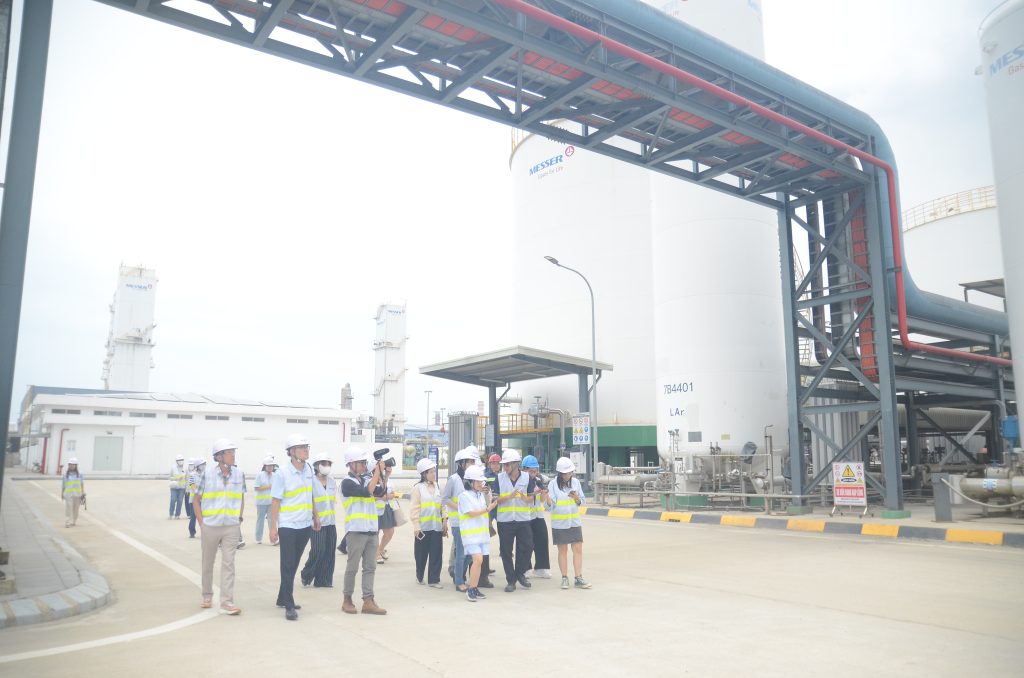
Journalists toured the Messer Dung Quat Air Separation Plant to learn about its green transition efforts. Photo: GIZ.
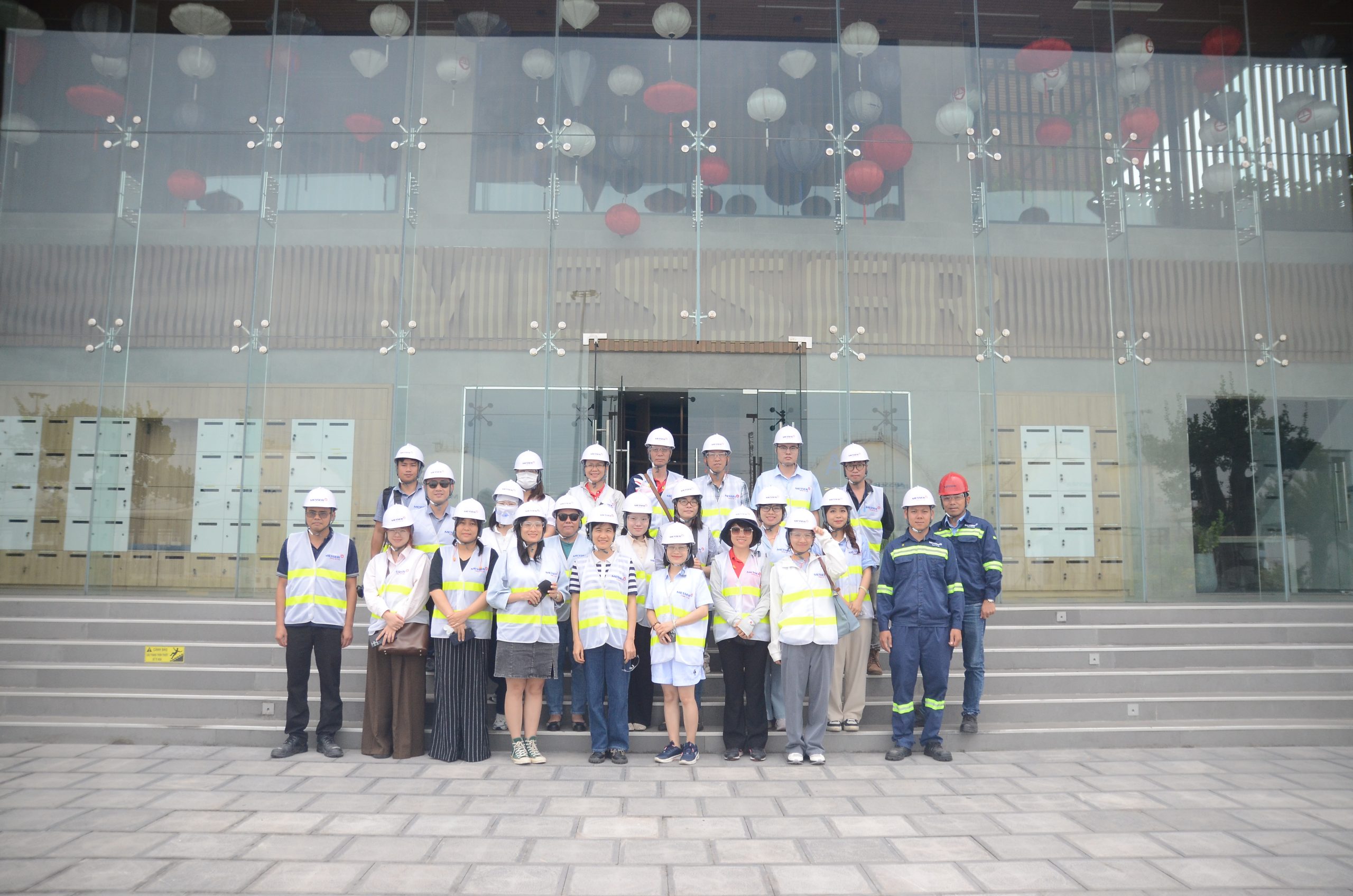
The Messer Dung Quat Air Separation Plant demonstrated how industrial gas infrastructure supports emissions reduction across manufacturing industries while creating opportunities for future hydrogen development. During the visit, journalists explored the role of industrial gases in helping industries reduce emissions and discussed the potential of hydrogen, as well as the conditions needed to develop a hydrogen-driven economy in the future.
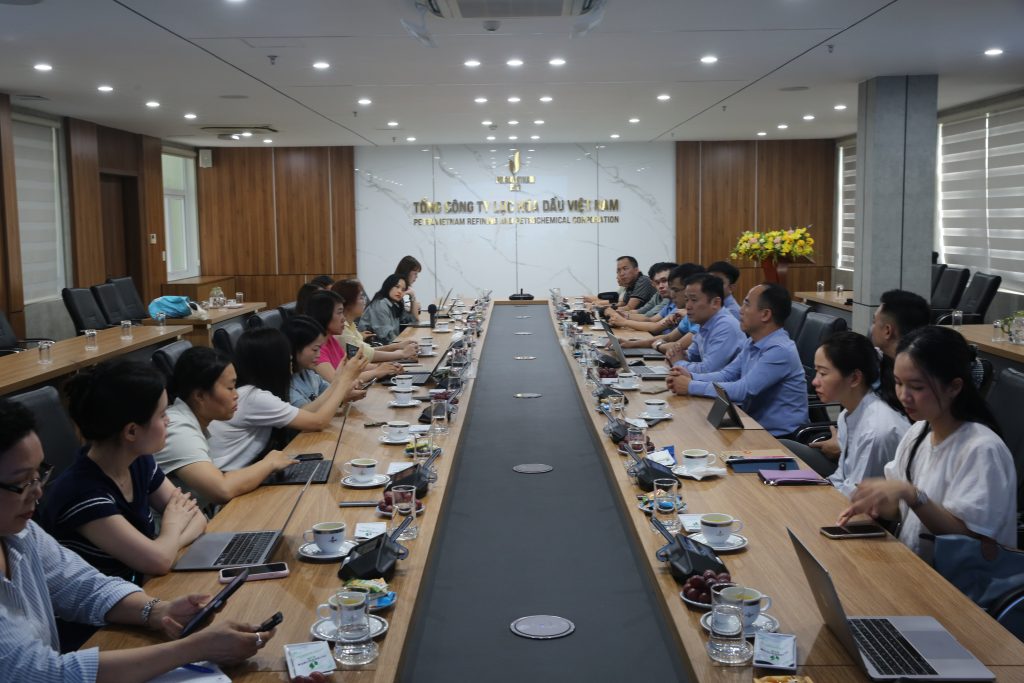
Journalists in discussion with representatives of Dung Quat Oil Refinery. Photo: BSR.
At the Dung Quat Oil Refinery operated by Binh Son Refining and Petrochemical Joint Stock Company (BSR), energy transition was viewed through the lens of a heavy industrial enterprise. Discussions on hydrogen research, Power-to-Liquid (PtL), and emissions-reduction strategies showed that the transition is no longer just an environmental requirement, yet it is becoming part of the company’s growth strategy and a way to strengthen its competitiveness.
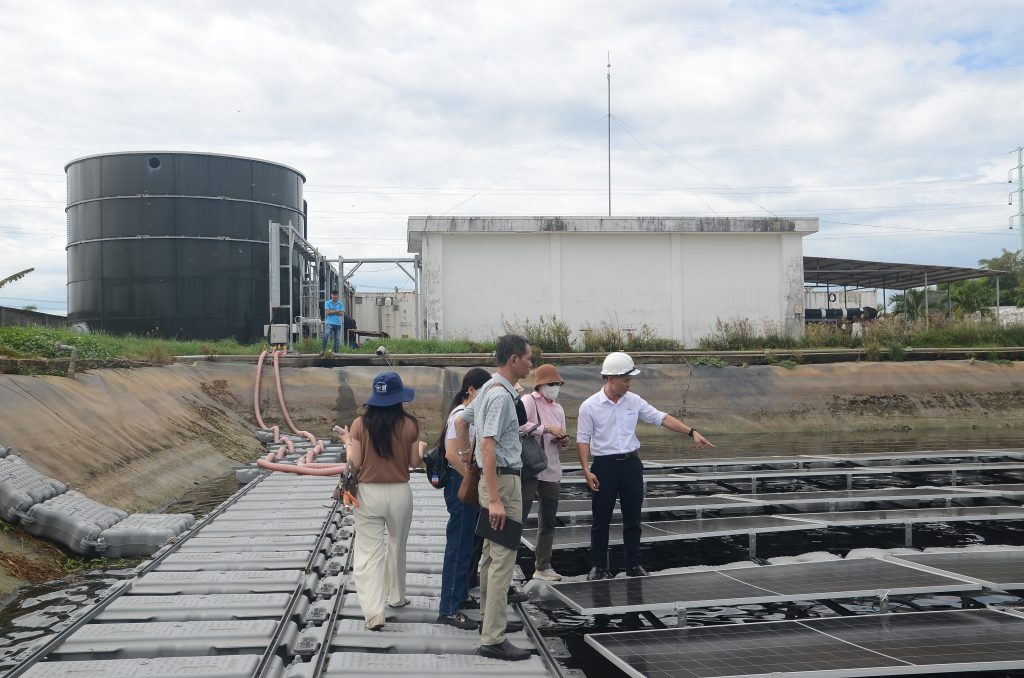
Journalists in discussion with the Project Director of the floating solar project at the Tam Thang Industrial Park water reclamation plant. Photo: GIZ.
The final stop was Damintech’s floating solar project, which sparked discussions on the potential for renewable energy development alongside the planning, grid infrastructure, and other key considerations needed to scale up these solutions sustainably.
According to Ms. Nguyen Ngoc Linh, PR & Communications Coordinator of the GIZ Energy Support Programme (ESP), the goal of the Press Trip was not simply to bring journalists to projects or enterprises, but to create opportunities for direct dialogue with the people driving the energy transition.
“Energy transition is a complex and rapidly evolving topic. We believe that direct, on-site dialogue would help journalists access multi-dimensional information, verify different perspectives, and tell balanced, evidence-based stories. This is also how GIZ hopes to support journalism in disseminating accurate information about Viet Nam’s energy transition.” – Ngoc Linh, PR & Communications Coordinator, GIZ Energy Support Programme.
From Information to Understanding
In the energy sector, where issues are becoming increasingly complex and technically demanding, firsthand experience provides value that documents or reports can hardly replace.
Some of the most meaningful discussions took place after the formal presentations had ended. Questions about technology costs, investment pathways, grid infrastructure, commercial viability, and business impacts were clarified through open conversations with company leaders and technical experts.
Not only would these exchanges help journalists understand what companies are doing, but the insights provided would also help them acknowledge why action is needed today, as well as the opportunities and challenges posed by energy transition.
Journalist Anh Thu of Voice of Vietnam (VOV) said field trips gave journalists more context to view energy issues more comprehensively. “Visiting enterprises directly lets us see not only the results achieved, but also better understand the difficulties, challenges, and trade-offs involved in the energy transition. This enabled us to produce more comprehensive, objective, and reality-based reporting,” she said.
By connecting journalists with businesses and experts, Press Trip 2026 helped deepen the understanding of new technologies and models, while fostering dialogue among stakeholders – a key factor in supporting just energy transition in Viet Nam.
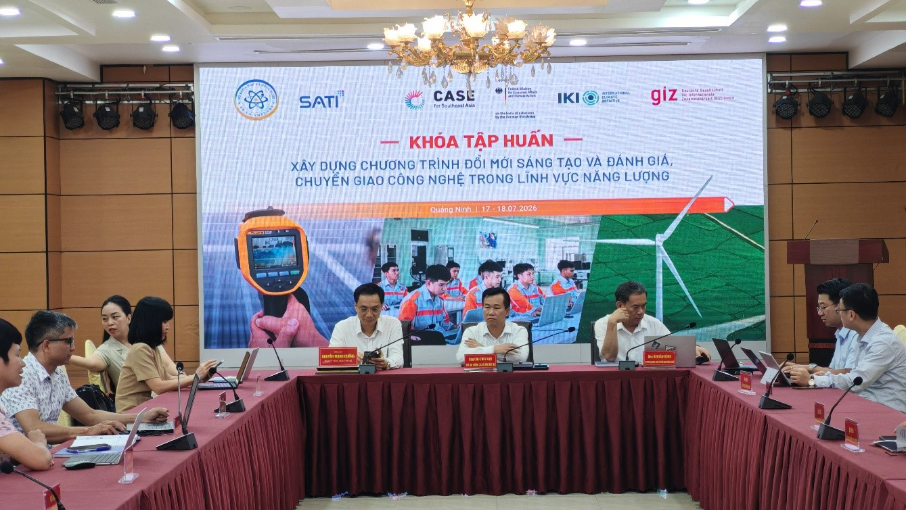
Press Trip is an annual event organized by the GIZ Energy Support Programme (ESP) to give journalists firsthand exposure to the realities of the energy transition, strengthen dialogue with businesses and experts, thereby fostering in-depth, evidence-based reporting on Viet Nam’s energy transition.
In 2026, the event was jointly organized by three projects under GIZ ESP: the Green Hydrogen Hub Viet Nam under the International Hydrogen Ramp-up Programme (H2Uppp), funded by the German Federal Ministry for Economic Affairs and Energy (BMWE); Clean, Affordable and Secure Energy for Southeast Asia (CASE) in Viet Nam; and Innovation Regions for a Just Energy Transition (JET-IKI), funded by Federal Ministry for the Environment, Climate Action, Nature Conservation and Nuclear Safety (BMUKN) via the International Climate Initiative (IKI), and jointly financed by the EU.
On behalf of the GIZ Energy Support Programme (ESP), we would like to extend our appreciation to Messer Viet Nam, Binh Son Refining and Petrochemical Joint Stock Company (BSR), Damintech, as well as 16 participating journalists and reporters for their active support and contribution to practical, open dialogue on Viet Nam’s energy transition.